


Your shopping cart is empty.
Surgical Sam Cardiothoracic Trainer


 Download:












35.0 lb


Surgical Sam Cardiothoracic Trainer
Item # TCG-4095
$29,000.00
Need an estimate?
Click Add To Quote

Features & Specifications
-
 by
by
A trusted GT partner -
 Gov't pricing
Available upon request
 by
by 
Frequently Bought Together
 (
(
Surgical Sam Cardiothoracic Trainer
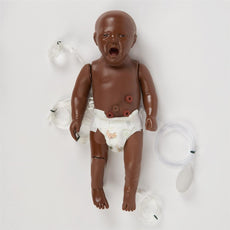
Surgical Sam Cardiothoracic is an advanced training model designed to simulate pediatric heart surgery scenarios, featuring ventilatable lungs, a beating heart, and bleeding vessels. Its realistic anatomy and functions allow medical teams to practice complex procedures, manage simulated emergencies, and develop critical skills in a safe, controlled environment.
-
Features:
- A beating heart with replaceable and cannulatable right atrium and aorta, a suturable bleed site, a reclosable sternum, and ventilatable lungs.
- The beating heart operates at various preset rates (60,90,120,160) or any rates in between with optional variable rate controller (0-160 bpm) #205
- A radial pulse can be simulated using a handheld bulb or pulse Controller included with beating heart controller.
-
Contains
- Surgical Sam Cardiothoracic (#TCG-4095)
- Surgical Sam Incisable Skin (#TCG-4098) 2 units
- Surgical Sam Beating Heart (#TCG-4108) with replaceable, cannulatable right atrium (#TCG-4120) and aorta (#TCG-4119)
- Beating Heart Controller with Pulse (#TCG-1463)
- Surgical Sam Shipping Case (#TCG-4100)
- Blood Kit for Surgical Sam (#TCG-32046)
- Quick Start Curriculum for CT (#TCG-32004) developed by Boston Children’s Hospital
SKILLS
-
Cardiothoracic Surgical Skills
- Median sternotomy and re-sternotomy techniques (including reclosure)
- Cannulation of right atrium and aorta for cardiopulmonary bypass (CPB) or ECMO placement setup
- Repair and management of cardiac hemorrhage using clamps, suturing or stapling with remotely controlled bleed sites
- Practice of cardiotomy suction, de-airing, and hemostatic control during open-heart surgery
- Hands-on manipulation of a beating heart with variable, programmable rhythms
-
Hemodynamic & Physiologic Response Skills
- Recognition and management of simulated hemorrhagic events
- Monitoring of pulse (manual or controller-synchronized)
- Control and observation of hemodynamic flow to the thoracic cavity
-
Technical & Operative Proficiency
- Use of standard pediatric cardiac instruments in a realistic operative field
- Precision suturing on small-scale pediatric cardiovascular structures
- Tissue handling and repair under hemodynamic load
- Practice of post-operative closure and wound management
-
Simulation Operations & Scenario Design
- Scenario-driven instruction using the Boston Children’s Hospital Quick Start Curriculum
-
Airway & Respiratory Management
- Intubation and ventilation of pediatric lungs
- Recognition of ventilation-induced movement and physiologic response
-
Pediatric-Specific Competencies
- Mastery of delicate anatomy and limited operative exposure typical of infants
- Development of fine-motor control for small-vessel cannulation and repair
- Familiarity with pediatric cardiac orientation and procedural ergonomics
-
Team-Based & Crisis Resource Management
- Full OR team simulation involving surgeons, anesthesiologists, perfusionists, and nurses
- Communication, role assignment, and coordination under stress
- Real-time crisis management (e.g., unexpected bleed, loss of flow, re-sternotomy)
- Reinforcement of safety checklists and sterile field discipline in pediatric cardiac cases
-
Works With:
- Surgical Sam Incisable Skin (#TCG-4098) 2 units
- Cannulatable right atrium (#TCG-4120)
- Cannulatable right aorta (#TCG-4119)
- Blood for Surgical Sam Bright Arterial Concentrate (#TCG-265)
GTSimulators by Global Technologies
The
Chamberlain Group Authorized Dealer
Effective pediatric critical care relies on training models that accurately replicate children’s anatomy and
physiological responses during surgery.
We offer two pediatric surgical team trainers—Surgical Sam General Surgery (#TCG-4096)
and Surgical
Sam for Cardiothoracic Surgery (#TCG-4095)
—developed in partnership with Boston Children’s Hospital. The modular system represents a 14-month-old infant
and includes an intubatable airway, incision- and suture-compatible skin, and bilateral radial pulse. Emergent
resternotomy and redo laparotomy scenarios have been repeatedly performed with both trainers by full OR teams as
part
of
a multi-year study under the guidance of the BCH Simulator Program (SIMPeds) director and principal investigator,
Peter
Weinstock, MD, PhD.
These trainers support critical surgical steps and provide immersive simulations to improve performance, safety, and
outcomes for infants. They are designed for multi-disciplinary team training scenarios.
Related Products
$2,122.00
Was $2,258.00
5-Year Multipurpose Pediatric Patient and Emergency Care Simulator, Medium
Item # S157.M
$1,841.00
Was $1,959.00
1-Year Multipurpose Patient Care and CPR Pediatric Simulator, Medium
Item # S117.M
$1,841.00
Was $1,959.00
1-Year Multipurpose Patient Care and CPR Pediatric Simulator, Dark
Item # S117.D
$2,122.00
Was $2,258.00
5-Year Multipurpose Pediatric Patient and Emergency Care Simulator, Dark
Item # S157.D
$1,841.00
Was $1,959.00
1-Year Multipurpose Patient Care and CPR Pediatric Simulator, Light
Item # S117.L

$2,122.00
Was $2,258.00
5-Year Multipurpose Pediatric Patient and Emergency Care Simulator, Light
Item # S157.L

by — Item # TCG-4095
Surgical Sam Cardiothoracic Trainer
$29,000.00
Add to Cart
Add to Quote

